Web snapshots in seconds
Undeniably prove the existence, availability, and integrity of any digital resource at a specific point in time!
Capture
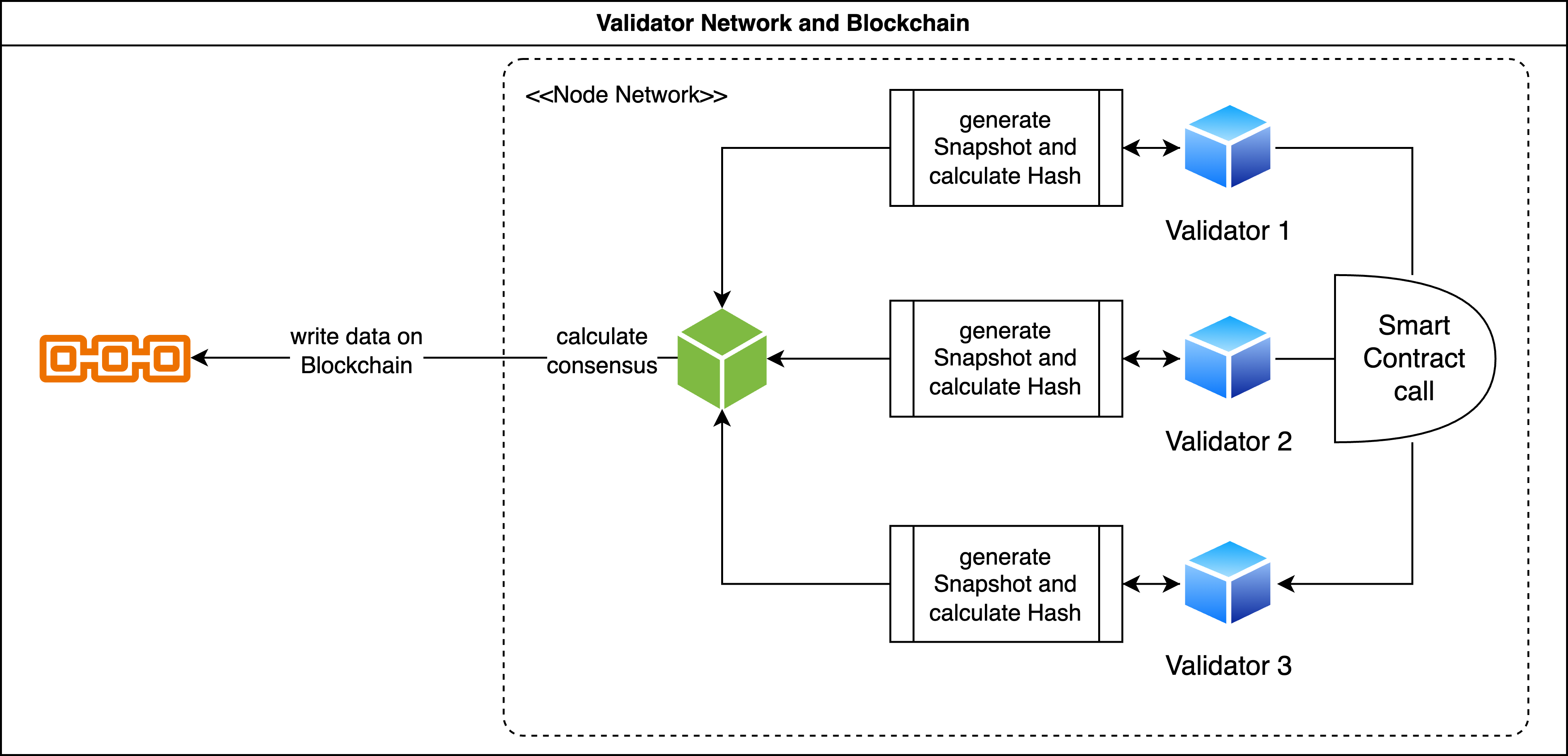
A screenshot of the content is captured by several independent participants in a network and a checksum is calculated.
Agreement
This checksum is used to compare the participants' verifications. If they match, the checksum is stored in a public blockchain - unchangeable and transparent.
Verification
By recalculating the checksum using the data and the underlying cryptographic function, it can be verified at any time that the proof has remained unchanged.
Assurance
It works for any web content, including social media posts, websites, documents and APIs, allowing a tamper-proof record to be created in seconds.
Distributed trust
Independent nodes validate your data with a unique hash, which is immutably stored on the blockchain.
- Easy to use
- Easy to use, no download required.
- Reliable
- Independent nodes verify the data without any intermediaries.
- Secure
- Impossible for attackers to take over all decentralized nodes.
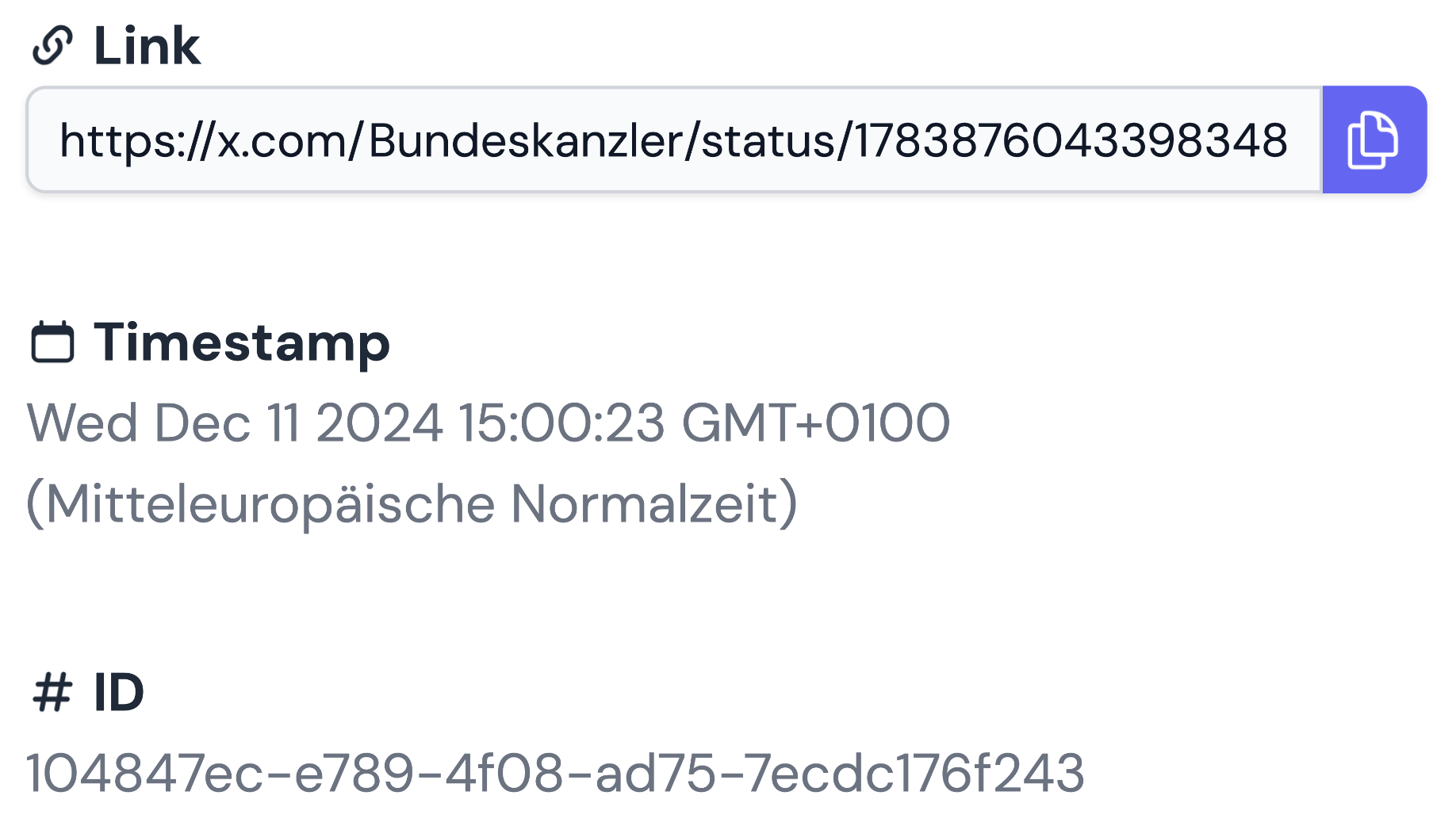
Strong evidence
Our data hunger is growing faster than our current methods can keep up with. That's why we need new solutions.
- Fast
- Data is validated in just a few seconds.
- Affordable
- Much cheaper than justifying data manually or covering litigation costs.
- Scalable
- Unlimited data throughput possible.
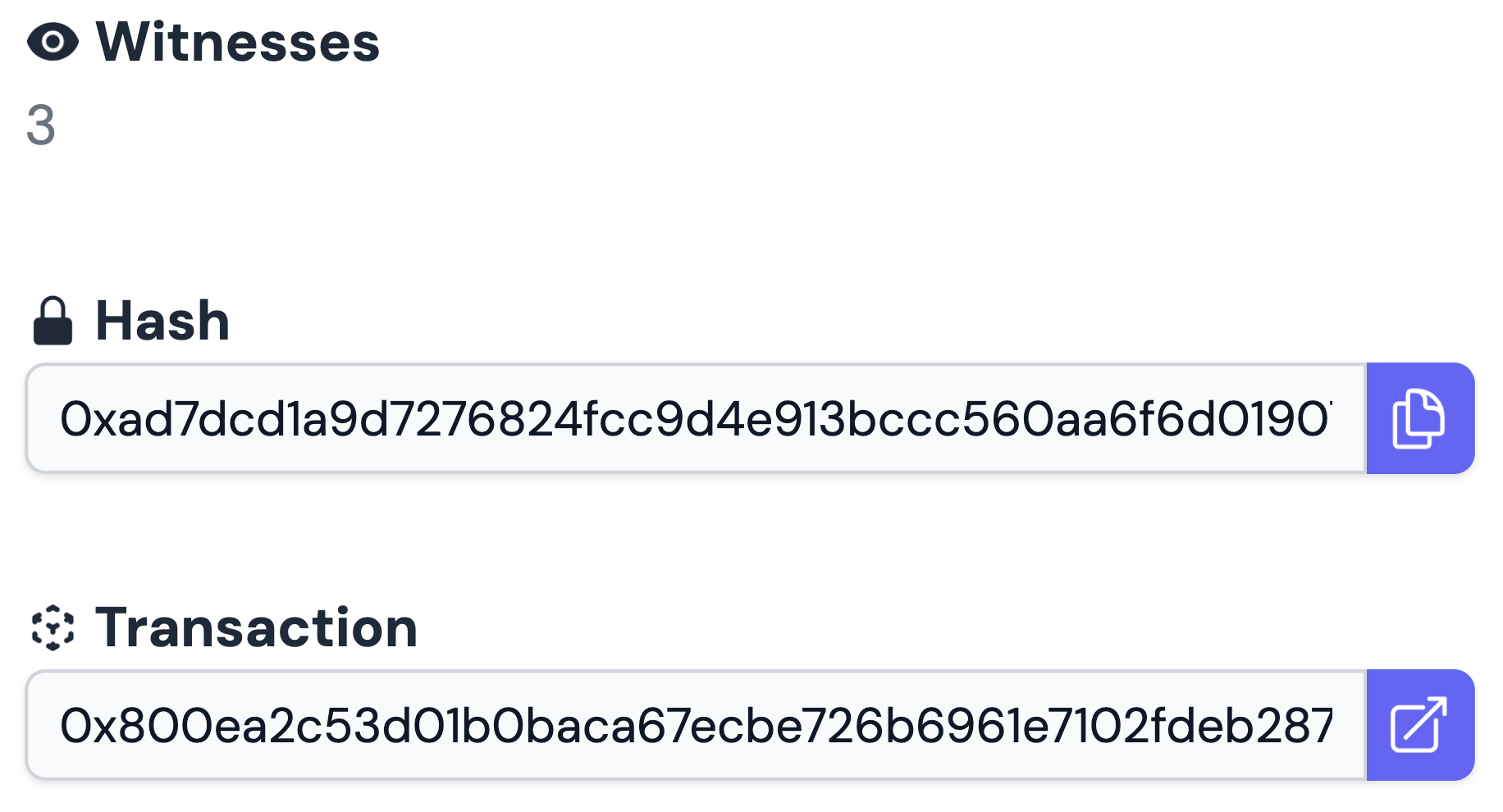
Architecture
How it works
Testimonials
Different use cases
What our users are saying.
As a lawyer, I use the service to verify online sources in a decentralized manner. Often, it comes down to proving things like an imprint, privacy policies, or cookie notices. Since the introduction of the Validity::service, we can bypass these traditional methods and offer decentralized proof. We can demonstrate that we neither created the screenshots ourselves nor made any changes to the document.
We track APIs, ensuring that the connections have always functioned reliably.
We now retrieve information from official notices via the Validity::service. This way, we can be certain that the information is 100% authentic, available, and will remain accessible forever.
By verifying with at least three decentralized nodes, we can prove that no changes have been made to our documents.
The Validity::service provides the ability to monitor websites for changes, allowing us to work with the most up-to-date information. We can be confident that we are not working with incorrect data.
A service that can archive the entire internet for us in a decentralized way and provide the hash even years later gives us the ability to prove to authorities and shareholders that we published the correct information at a specific point in time (Time X).
Frequently asked questions
The most common questions we receive.